Two major, long-running projects that have shaped computer science (CS) education in Alabama classrooms are reaching completion this fall. Both initiatives — each more than five years in the making — represent a successful collaboration between The University of Alabama’s College of Education and College of Engineering. Together, they have played a pivotal role in preparing teachers to bring CS instruction into classrooms across the state.
NSF SEED project expands computer science teacher certification
The National Science Foundation (NSF) Supporting Emerging Education in Computing Disciplines (SEED) project began in 2017 as a $300,000 pilot program (NSF SEMA) and later expanded into a full-scale initiative supported by nearly $1 million in NSF funding. The project officially concluded Sept. 30.
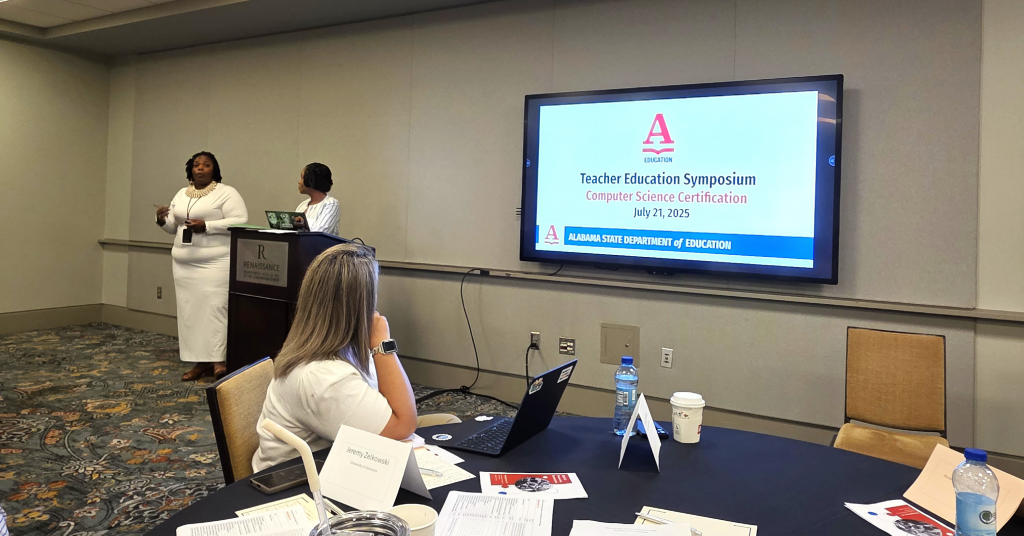
Led by the University, SEED has developed and implemented a statewide pathway for CS teacher certification, creating a two-course curriculum for pre-service secondary education majors. This curriculum, endorsed by the Alabama State Department of Education, allows students to become certified to teach the College Board’s AP Computer Science Principles course and prepares them for the Praxis exam required for full certification.
The program has united the colleges of education and computer science departments at six Alabama universities — UA, The University of Alabama at Birmingham, The University of Alabama in Huntsville, Jacksonville State University, University of South Alabama and Alabama State University — to develop and share CS teacher preparation models. By the end of the project, SEED expects to certify 95 students for AP CSP and an additional 39 for full CS Praxis endorsement, helping to build Alabama’s future teaching workforce in a growing and essential field.
“This project represents a collaborative, statewide effort to prepare the next generation of computer science educators,” said Dr. Jeff Gray, professor of computer science. “Our goal has always been to make sure every student in Alabama has access to high-quality computer science instruction.”
For more information, visit seed4alcs.ua.edu.
PACS project building pathways for computer science in rural schools
The Pathways for Alabama Computer Science (PACS) project, funded by the U.S. Department of Education for $3.9 million, has been running since 2020 and also concluded on Sept. 30. PACS is administered through the Alabama State Department of Education, with UA serving as the passthrough institution.
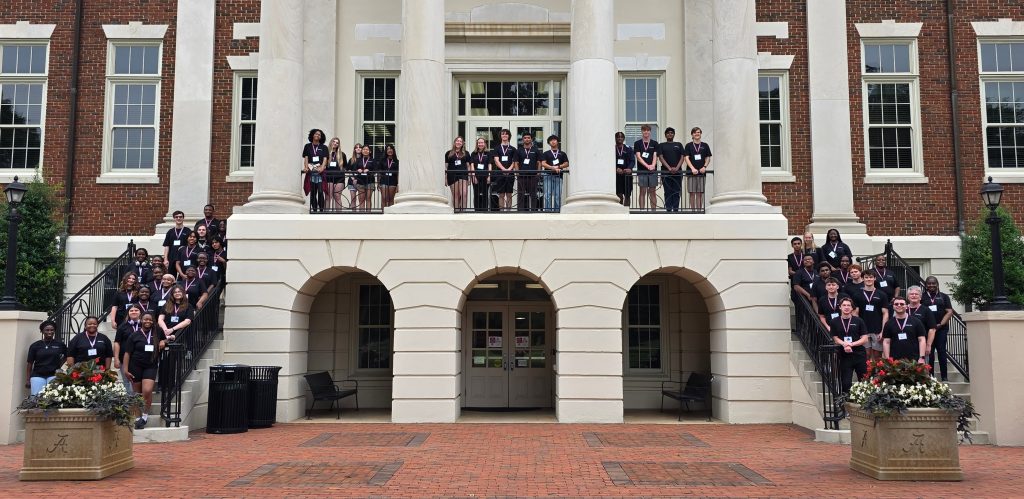
The program established a statewide CS pathway for high school students, focusing on high-need and rural schools. Each year, the initiative has trained over 110 teachers and 60 counselors during intensive summer and academic-year professional development sessions hosted at The University of Alabama and Tuskegee University.
These educators receive training in three evidence-based curricula — Bootstrap Algebra, Exploring Computer Science (ECS), and AP Computer Science Principles (AP CSP) — which form a comprehensive pathway for students. Counselors participate alongside teachers to help expand awareness of CS careers and ensure equitable access for underrepresented students.
Since 2019, more than 450 teachers and 230 counselors have been trained through PACS. The program has helped position Alabama as a national leader in K–12 computer science education, with more than 92% of high schools now offering CS courses, ranking the state 4th in the nation.
“PACS has created a sustainable model for bringing computer science to every corner of Alabama,” said Dr. Jeremy Zelkowski, professor, secondary mathematics education. “Our work supports the state’s new high school graduation requirement in computer science, approved by the Alabama State Board of Education in August 2024.”
Learn more at cs4alabama.org/pacs.html.
Lasting impact
As both SEED and PACS concluded this year, they will both continue to influence teacher preparation, curriculum development and equitable access to computer science education statewide. Together, these projects have built pathways that ensure future generations of Alabama students are prepared for the digital workforce.
More photos: